Appliance repair and installation for Clinton homes and businesses: refrigerators, washers, dryers, ovens, dishwashers, and built in appliances, with published price ranges up front and a written figure before any work begins.
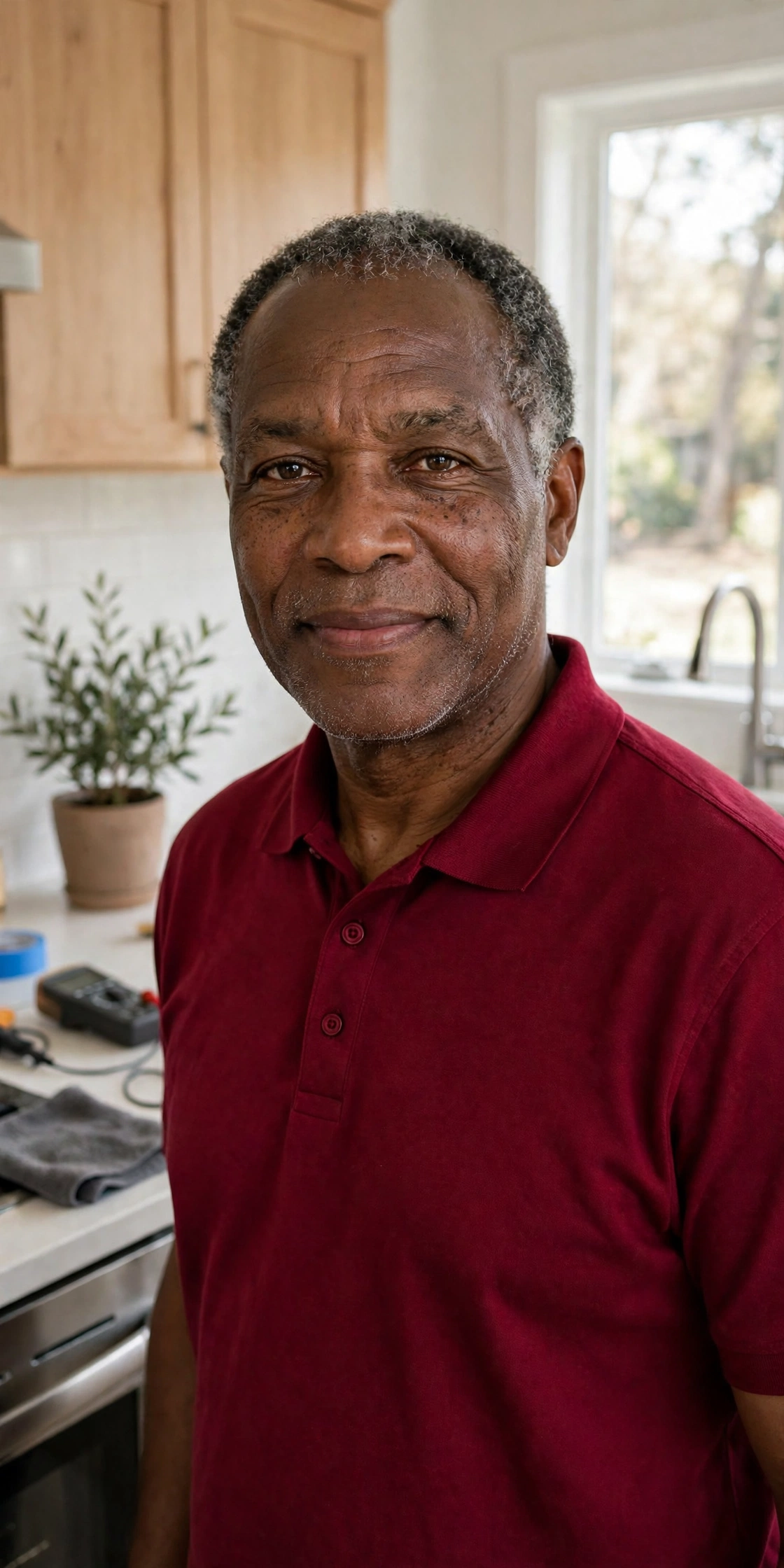
Robert Hayes, owner of Clinton Appliance Repair Co
Robert Hayes, Owner and Lead Technician
I'm Robert Hayes, owner and lead technician at Clinton Appliance Repair Co, and I read every quote request that comes through this site myself. You are not handing your problem off to a call center or a form that disappears. When you describe what your refrigerator, washer, or oven is doing, I am the one reviewing it, thinking through what could cause it, and deciding what we need to check first. That personal review is where every job here starts, before anyone talks about a repair or a price today.
I publish price bands on this site so you can plan before you call, and I want to be clear about where they come from. Those ranges are drawn from published national guides and are labeled as such. They are a starting point, not a quote. The real figure comes from the diagnostic visit, when I can test the appliance, confirm the fault, and see exactly what parts and labor the job needs. That visit turns the band into one written figure. Once you approve it, that approved figure is the final figure, with no add-ons afterward.
I also tell owners plainly when replacement beats repair. If an appliance has reached the point where a fix costs more than it is worth, or the same failure will keep returning, I will say so directly and explain why. That honesty matters here in Clinton, where I work in single family subdivisions built from the 1970s onward, in larger colonials out toward Rosaryville and Woodyard, and for homeowners who take care of what they own and prefer to repair rather than replace. Knowing these homes shapes how I approach every job.
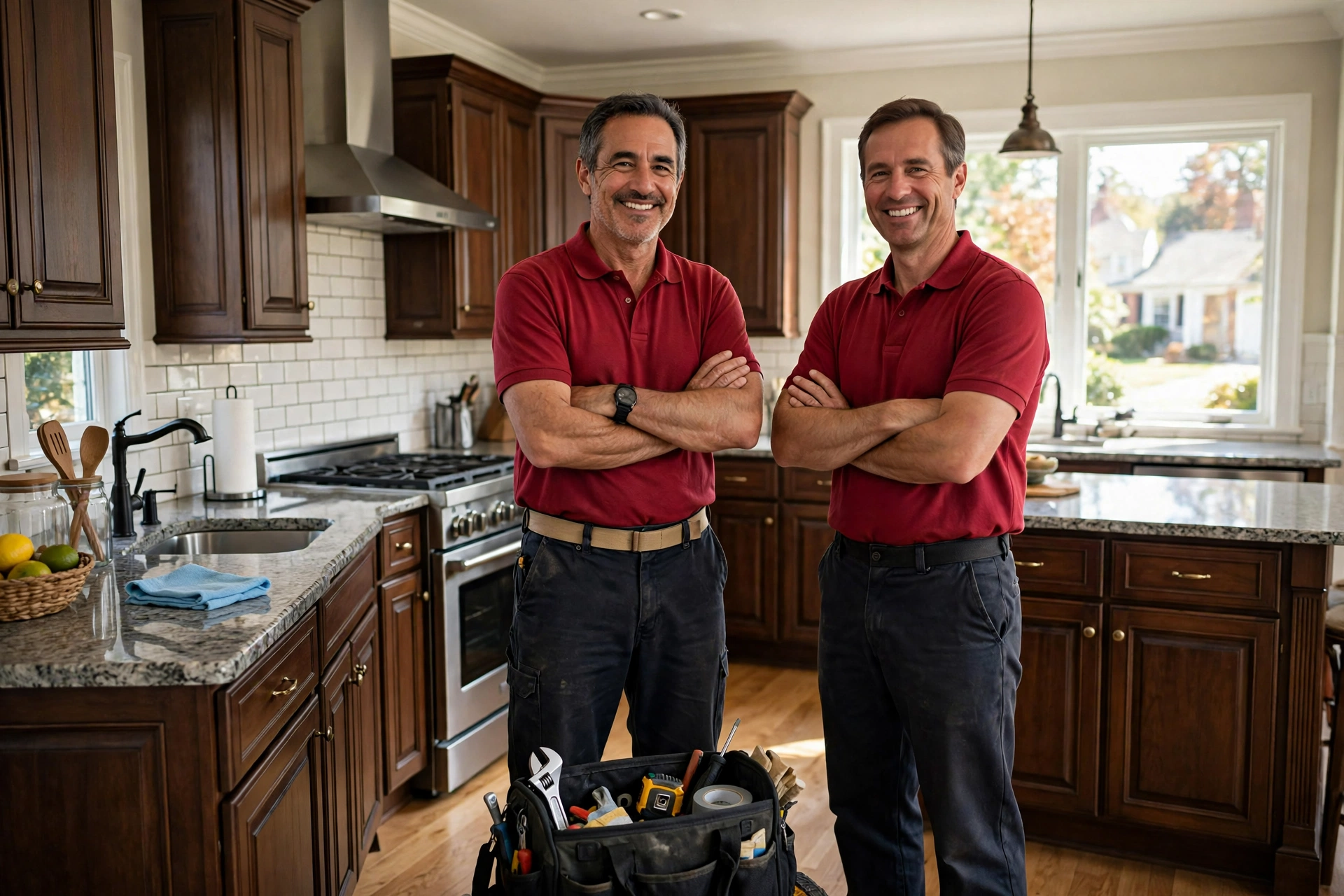
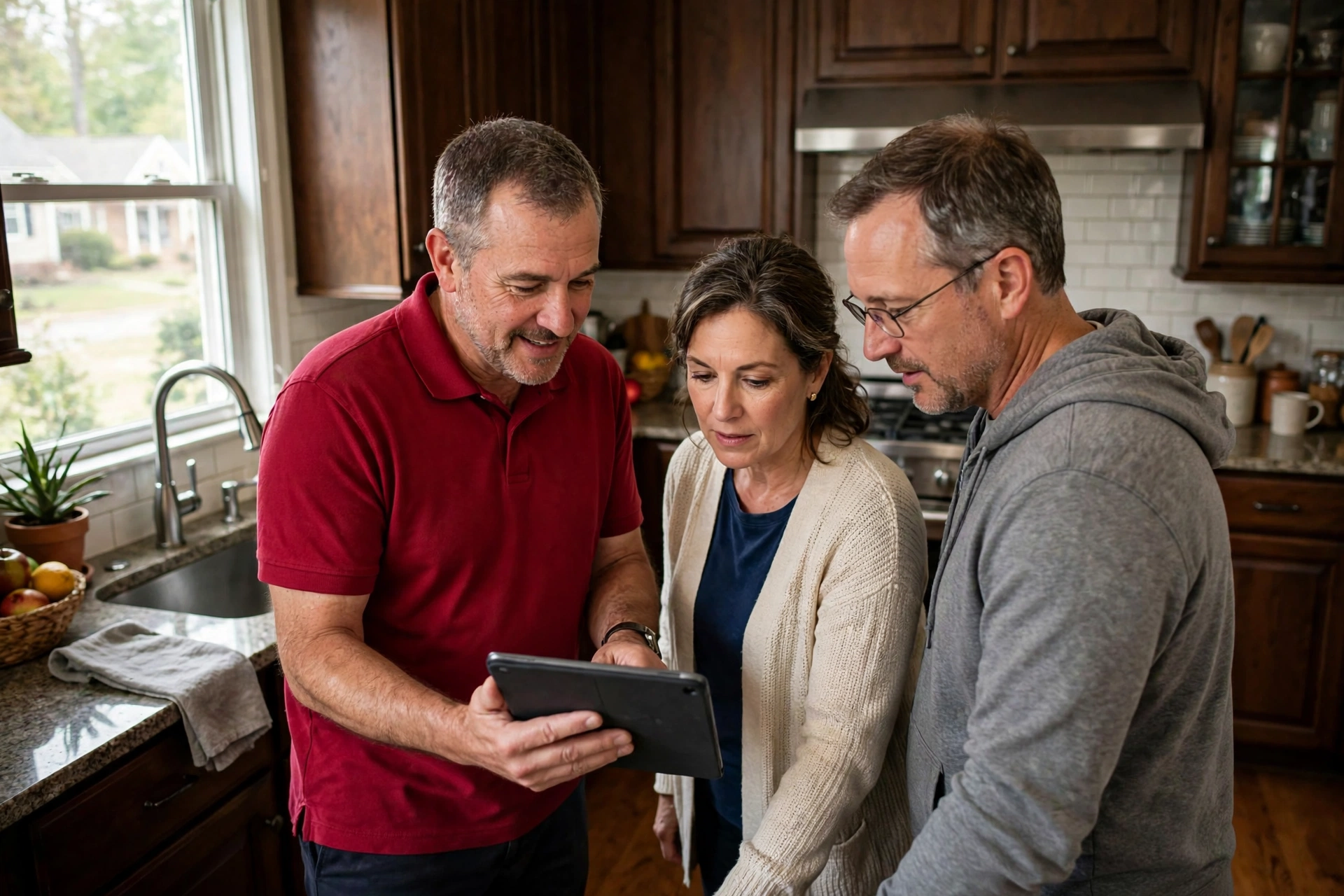
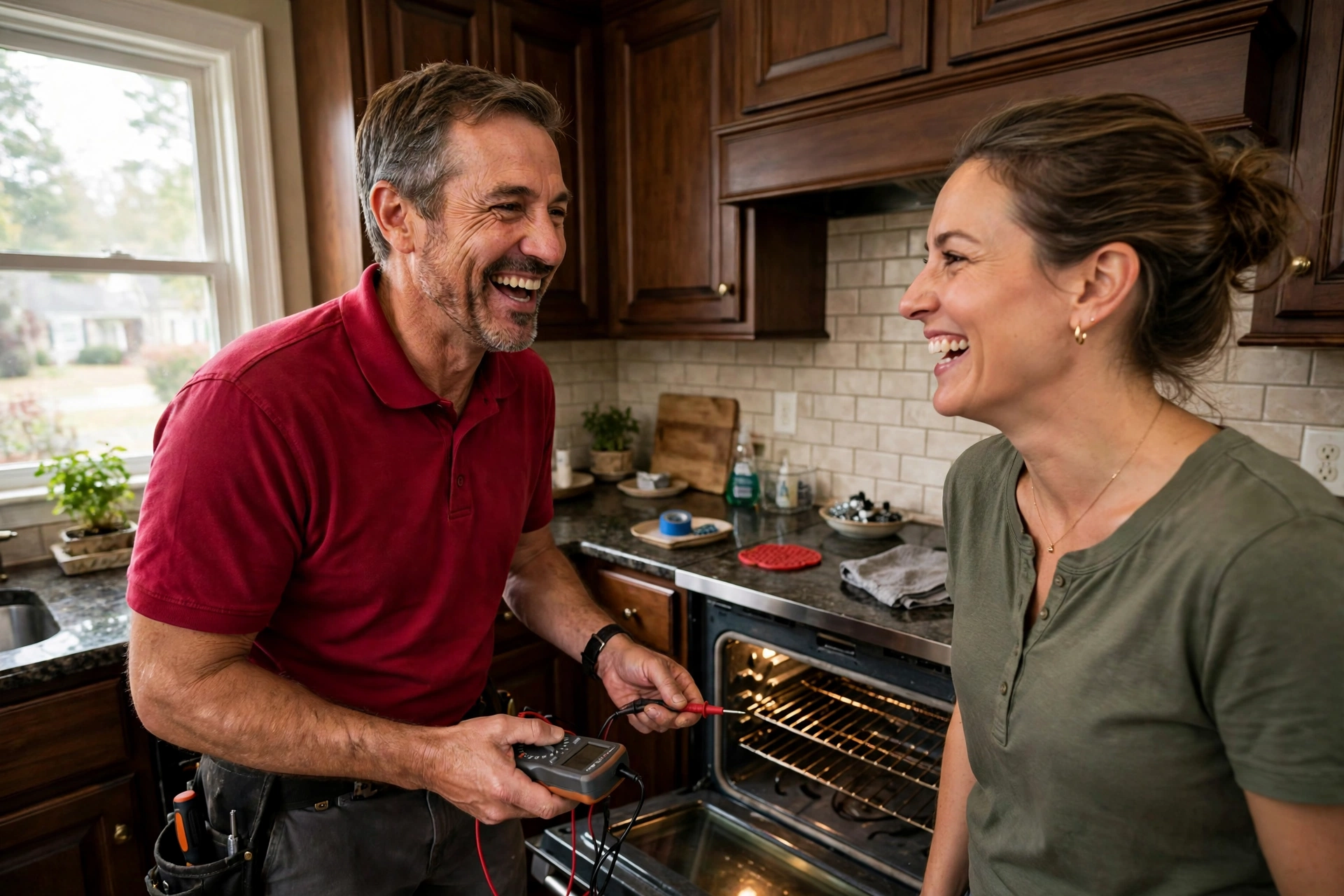
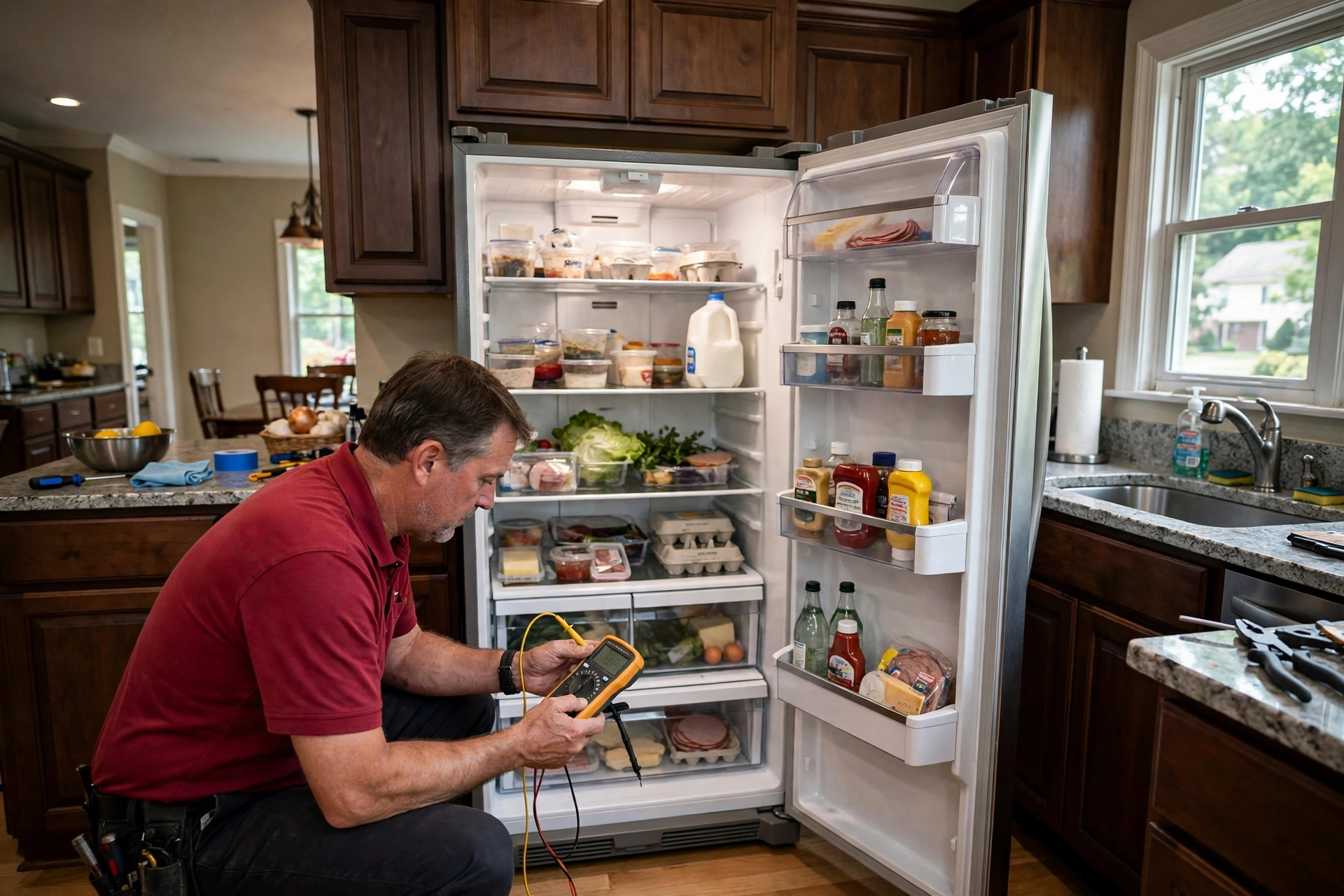
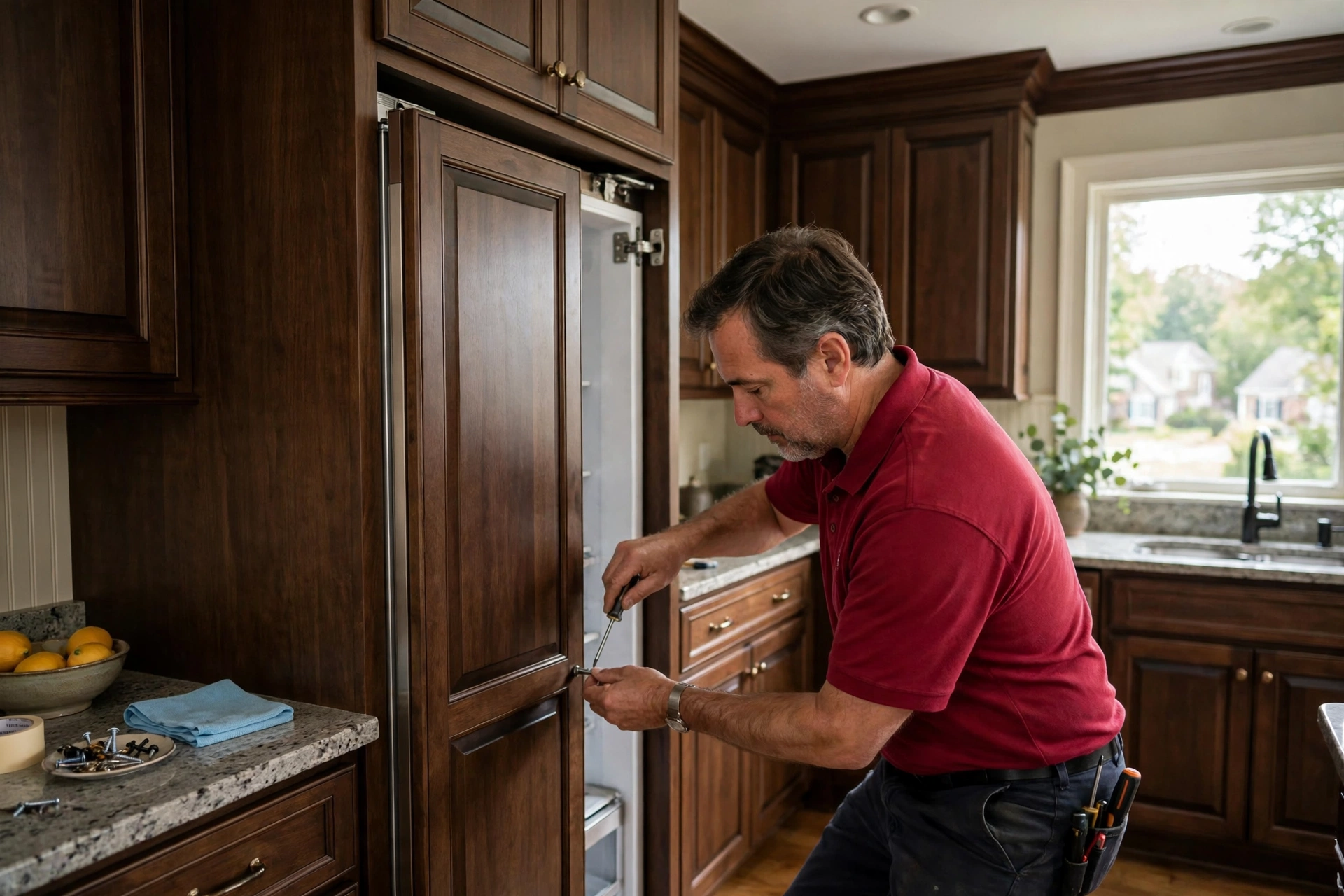
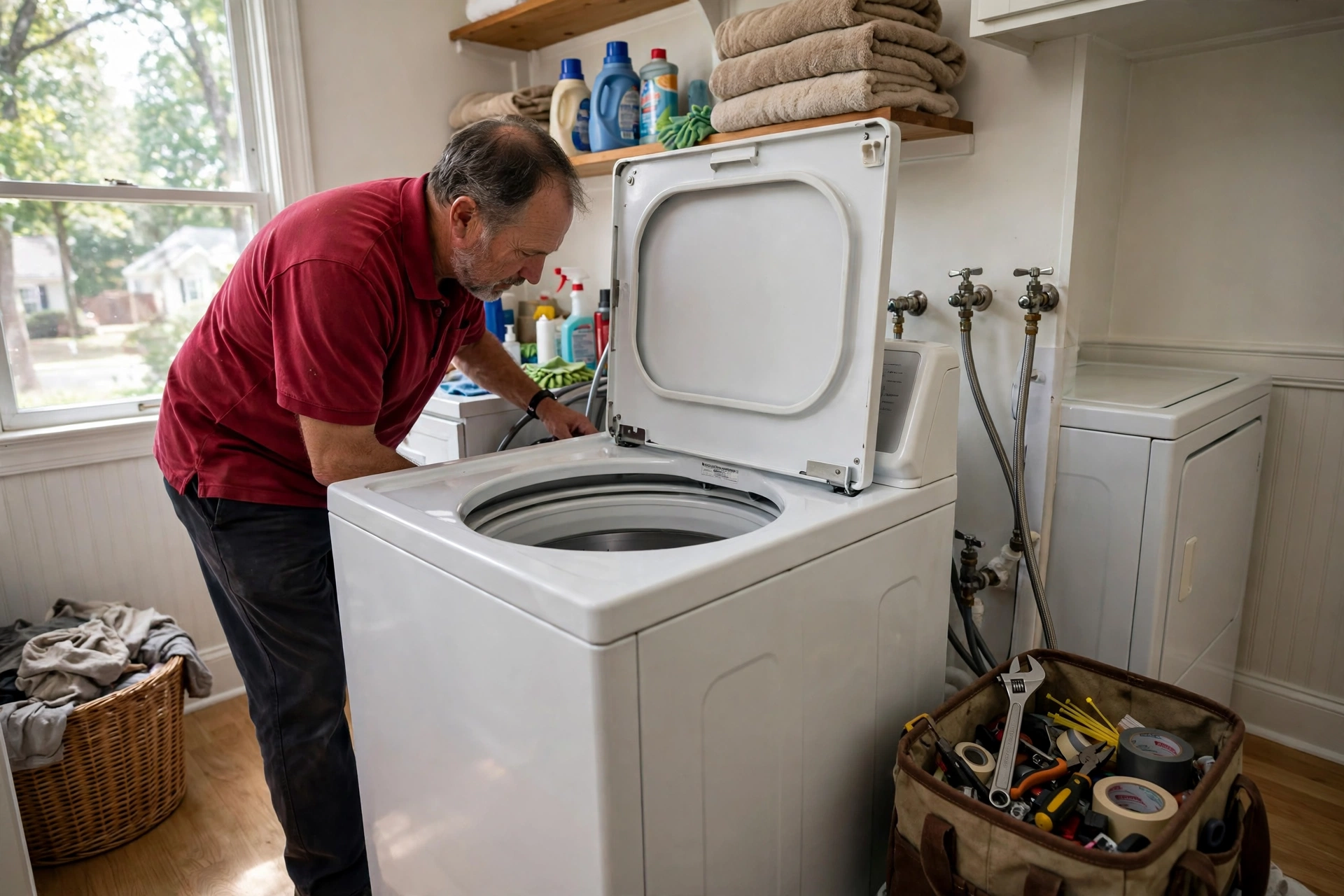
The crew, ready for the day's callsWalking a homeowner through the diagnosisTesting the repair before we call it done
At Clinton Appliance Repair Co, we repair refrigerators, ovens, ranges, washers, dryers, and dishwashers for homeowners in Clinton, MD. Our days run through kitchens and laundry rooms across the city, and the calls repeat because the machines do: a fridge warming up overnight, a washer stopped mid cycle, full. Those calls shape the work, and this page describes how the work is done.
Clinton is a homeowner community of single family subdivisions built from the 1970s onward, with larger colonials toward Rosaryville and Woodyard, and appliances that are maintained and repaired rather than quickly replaced. The building stock decides which appliances a city owns, and the repair years arrive for whole neighborhoods at once: the same subdivisions, the same builder packages, the same machines aging in step.
What this company sells first is certainty: a fault proven by testing, a figure in writing, and a repair verified under load. The appliances of Clinton get that sequence whether the ticket is a refrigerator or a range hood.
A call from Temple Hills: Side by side refrigerator with water pooling under the drawers. Testing found the defrost drain was frozen solid at the funnel. We thawed and flushed the drain, fitted a drain probe to keep it clear, and dried the cabinet floor. Well water on Clinton's edges and county water at its core leave different signatures, and we read both.
Turnaround
Finished in one visit.
Final Price
$335
A call from Camp Springs: Built in showing temperature swings on the display. Testing found a drifting cabinet sensor reporting false readings to a healthy control. We replaced the sensor and verified display against an independent thermometer across a day of cycles. Camp Springs and Temple Hills work routes through the same written standard as Clinton itself.
Turnaround
Finished in one visit.
Final Price
$485
A call from Waldorf: Washer quitting before the spin cycle. Testing found a failed shift actuator that never reported the spin position. We replaced the actuator, cleared the stored codes, and ran two full cycles. Clinton's 1970s subdivisions are reaching the age where whole streets call in the same season.
Turnaround
Finished in one visit.
Final Price
$280
Residential Appliance Repair in Clinton, MD
The menu below is the whole trade as households actually use it: the cooling, cooking, and laundry machines, the specialty units around them, and installation done to the same standard as repair. Every service page publishes its cost band before you book anything. The method does not change between the subdivisions and the rural edges.
When the fresh food side runs warm, airflow is the first suspect: an evaporator fan that quit, a damper door stuck closed, or condenser coils blanketed in dust and pet hair. It is core work in Clinton, quoted from the published band on its service page after a real diagnosis, never from the symptom alone.
An oven that runs hot or cold by a steady margin usually needs calibration or a new temperature sensor, both small repairs with a big effect on baking. In Clinton, it is among the most booked services on this site, and it is diagnosed the way every service here is: tested first, quoted in writing, then repaired.
Standing water and a humming pump is the most common washer call in the trade: a failed pump, or something small and cloth stopping it cold. Households in Clinton book it through the form below, and the visit follows the pattern this page describes: evidence first, one figure, then the fix.
An electric dryer that tumbles without heat has usually lost one leg of its heating element or blown the thermal fuse that protects it. It is core work in Clinton, quoted from the published band on its service page after a real diagnosis, never from the symptom alone.
A tub that will not drain points first at the pump and the path out: filter, hose, and the connection at the disposal or sink, where a shard of glass or a jar label can stop drainage cold. Households in Clinton book it through the form below, and the visit follows the pattern this page describes: evidence first, one figure, then the fix.
Slight temperature drift is the expensive freezer fault, because it quietly degrades everything stored while the machine still sounds healthy. In Clinton, it is among the most booked services on this site, and it is diagnosed the way every service here is: tested first, quoted in writing, then repaired.
Gas zones fail at ignition or at flame quality: electrodes, switches, and ports for the first; clogged or corroded burner heads for the second. The service page carries the full fault list and the cost band for Clinton homes.
Door switches lead the repair list by a wide margin: a microwave that will not start, or that starts when the door moves, is usually reporting a switch, not its magnetron. Households in Clinton book it through the form below, and the visit follows the pattern this page describes: evidence first, one figure, then the fix.
Commercial Appliance Repair in Clinton, MD
Commercial Refrigerator Repair
Reach in coolers, prep refrigeration, and undercounter units in Clinton cafes, offices, and small restaurants, triaged by what is at risk inside the box and repaired with the business clock in mind. Clinton households plan on real figures, and this page exists so they can.
Commercial Laundry Repair
Laundry serving tenants, guests, and clients wears on a schedule rather than by surprise. We repair the machines and report the fleet's condition in writing, per unit, so owners can plan instead of react. No pressure, no mystery pricing, no parts on suspicion: the Clinton bargain.
Restaurant Oven and Range Repair
Cafe and community kitchen cooking equipment in Clinton gets the same thermometer discipline as our residential oven work, with documentation sized for committees and managers. That standard holds from Temple Hills to Brandywine, street by street.
Appliance Repair for Rental Properties and Property Managers
Managers booking from Clinton get the file ready version of appliance repair: a written verdict, a single figure, and a record that survives the group chat and the budget meeting alike. The proof, anywhere around Clinton, is a machine running its real work before we leave.
Recent appliance repair Projects in Clinton, MD
The cards below follow the shape of recent work in Clinton neighborhoods. Each names the repair type, where it took place, when, and what the finished repair cost.
Dishwasher Repair in Camp Springs, September 2026, $170
The call from Camp Springs was a dishwasher leaking at a door corner. A hardened seal and a quarter inch of level were the whole story; both were put right and the floor stayed dry through a heated cycle.
Dryer Repair in Fort Washington, August 2026, $305
In Fort Washington, the complaint was two cycles for every load. Airflow, not heat, was the failure: a crushed vent transition and a loaded vent path, corrected and proven on the timer.
Oven and Range Repair in Brandywine, July 2026, $365
In a Brandywine kitchen, the temperature sensor had drifted, and the lower element showed a visible weak spot. Both parts were replaced during the visit. The oven was then heated and checked at two temperatures to confirm even baking.
Freezer and Ice Maker Repair in Oxon Hill, June 2026, $190
A garage freezer in Oxon Hill was losing ground in the heat. Dirty coils and a tired gasket shared the blame; cleaned and renewed, it held zero through a hot afternoon.
Stove and Cooktop Repair in Camp Springs, May 2026, $200
In Camp Springs, a glass top zone quit mid cooking. The element tested open; a new one was fitted and the surface reseated properly.
Front Load Washer Repair in Fort Washington, April 2026, $300
A front loader in Fort Washington shook the laundry room on spin. Worn dampers and a loaded filter were the findings; with both handled, a full load spun quietly.
Why Clinton Appliance Repair Co Is the Best Appliance Repair in Clinton, MD
Our Process
Every job follows the same order: listen to the symptom, test the machine, name the fault with evidence, quote one figure in writing, then repair and prove the repair under load. The order matters because each step protects the next one; a quote written before the test is a guess with a dollar sign, and a repair without a proof cycle is a promise instead of a result. The visit record documents readings and parts, so the work can be audited by anyone, including us, months later. In Clinton, tested first and quoted in writing is simply how the work runs.
Materials We Use
Parts are matched to the machine by model and specification, and wear parts like hoses, lines, and seals are renewed rather than reused when a job opens them up. Where a component has a known better revision, that is what gets fitted, and the old part is available for you to see. We would rather explain a part choice for two minutes than defend it for two years. That standard holds from Temple Hills to Brandywine, street by street.
Timeline and What to Expect
Most common repairs finish in a single visit once the part is in hand, and the scheduling conversation tells you plainly which class your job is in. Diagnosis comes first at the published visit range, credited toward the repair when you proceed; the figure you approve is the figure for the work described, and if the machine reveals a second fault mid repair, you hear about it before it costs anything. No pressure, no mystery pricing, no parts on suspicion: the Clinton bargain.
Appliance Repair Cost in Clinton, MD
Repair pricing is published here because it should be: the national guides put the average appliance repair near $179, with most jobs between $108 and $251, and the categories below show how the work on this site is banded. Your figure is written after diagnosis and before work, every time. The method does not change between the subdivisions and the rural edges.
Average Appliance Repair Costs
Published guides put the average appliance repair at about $179 per job, with a typical range of $108 to $251. Faults near the lower end usually involve one accessible part, a switch, a fuse, a belt. Work near the upper end tends to involve cooling systems, control boards, or machines that take longer to open and test. Two refrigerators with the same symptom can need very different parts, which is why the figure follows the diagnosis. Clinton households plan on real figures, and this page exists so they can.
Refrigeration, Cooking, and Laundry Averages
By category, the guides put refrigeration near $255 on average, cooking near $214, and laundry near $184. The spread tracks the systems involved: sealed refrigeration at one end, belts and pumps at the other, with cooking's igniters and elements in between. Your appliance's band is published on its service page. In Clinton, tested first and quoted in writing is simply how the work runs.
Diagnostic Visit Costs
A diagnostic visit commonly runs $75 to $125 in the published figures, usually credited toward the repair when work goes ahead. The visit finds the real answer, since one symptom like a warm refrigerator can trace to half a dozen parts. Proper testing first protects you from paying for the wrong repair, and if a machine is not worth repairing, you still leave with a clear finding and its reason. The proof, anywhere around Clinton, is a machine running its real work before we leave.
What Moves an Appliance Repair Price
Four things move a repair figure: the part, the access, the machine's age, and the platform it belongs to. Labor follows the depth of the machine the part lives in, and parts follow the manufacturer's pricing for that class. The diagnostic visit exists to put all four on the table before you are quoted. In Clinton, tested first and quoted in writing is simply how the work runs.
Clinton Appliance Repair Co Serves Clinton and Surrounding Areas
Coverage radiates from Clinton through the communities below. Every area listed has its own page, and every page books the same service described on this homepage. The areas: Waldorf, Fort Washington, Temple Hills, Camp Springs, Upper Marlboro, Brandywine, Accokeek, Oxon Hill, District Heights, Forest Heights.
Also covered: Suitland, Marlow Heights, Morningside, Hillcrest Heights, Glassmanor, Friendly, Rosaryville, Cheltenham, Bryans Road, Piscataway. Each community has its own page on this site with the services, the cost framing, and a recent project from that side of the service area.
Start with the guides: $179 average, $108 to $251 typical range, and category averages of about $255 for refrigeration, $214 for cooking, and $184 for laundry. Then let the diagnosis price your actual fault, in writing, before any work. The proof, anywhere around Clinton, is a machine running its real work before we leave.
Which repairs are usually worth doing?
The wear part repairs: fans, pumps, igniters, elements, switches, hoses, and seals, on machines whose cabinets and main systems are sound. The visits that end in replace are the structural and end of life failures, and we document those verdicts the same way. Clinton households plan on real figures, and this page exists so they can.
Do you repair my brand?
We service the major brands sold in this region across kitchen and laundry, and most of the faults on this page are shared across brands because the underlying systems are shared. Tell us the brand and model on the form and we will confirm before the visit. No pressure, no mystery pricing, no parts on suspicion: the Clinton bargain.
What happens during a diagnostic visit?
The technician runs the appliance, reads any stored error codes, and tests the suspect systems with meters and thermometers. You receive the fault in plain language, one written figure for the repair, and an honest note on urgency. The visit is $75 to $125 per the published guides and is credited toward the repair when you proceed. The method does not change between the subdivisions and the rural edges.
How does the quote form work?
The form asks for the six things a booking needs: name, phone, email, address, repair or install, and your notes on the appliance. A person reads it, and the reply carries the relevant price band and the scheduling options. That standard holds from Temple Hills to Brandywine, street by street.
Is it worth repairing an older appliance?
Age alone does not decide it. Condition and parts decide it, and both are checked on the diagnostic visit before you are quoted anything. In Clinton, tested first and quoted in writing is simply how the work runs.
Get Your Appliance Repair Quote
Tell us which appliance is failing and how, or which appliance you need installed. We read every request that comes in and respond with the published range for that kind of work and the next step, starting with a diagnostic visit to confirm the fault.
Prefer to talk it through first? Send the form and we will call you back at the number you give us.